Last reviewed: September 2026
Enterprise programmatic advertising requires more than campaign execution. Large brands need global market coordination, first-party data activation, privacy governance, service-level agreements, transparent fees, advanced measurement and consistent brand-safety controls.
The right partner must also work across internal teams. Media, analytics, procurement, legal, privacy, creative and regional stakeholders all influence how an enterprise program operates.
This guide compares seven programmatic agencies and partners suited to complex, multi-market advertisers. For a broader list across different company sizes, see our general programmatic agency comparison.
Quick answer: Merkle is a strong choice for enterprise CRM and first-party data activation; dentsu, GroupM and Publicis Media suit global organizations requiring holding-company scale; Havas Media Network fits integrated brand and performance programs; MiQ provides specialist managed programmatic execution; and AdGeeks is the most flexible independent option for multi-DSP access through DV360, Amazon DSP and Adform.
Share your markets, DSP requirements, data environment, governance needs and preferred service model. AdGeeks will recommend a scalable setup for your organization.
How We Evaluated Enterprise Programmatic Partners
Global execution: Ability to coordinate campaigns, teams and reporting across multiple markets.
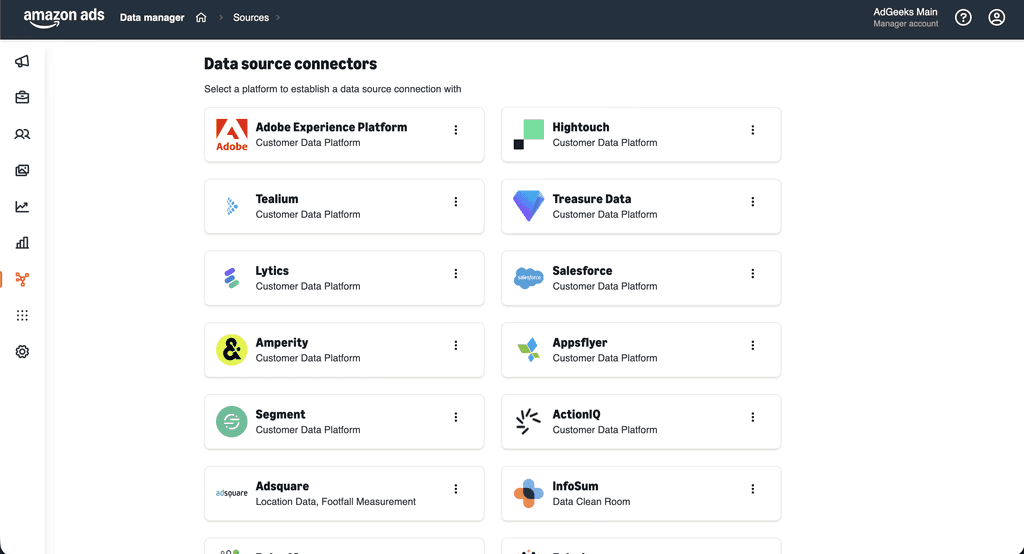
First-party data: CRM, CDP, clean-room, identity and privacy-safe activation capabilities.
DSP and inventory access: Support for the buying platforms, channels and deal types required.
Governance: Brand safety, privacy, approval workflows, auditability and account ownership.
Measurement: Cross-channel reporting, incrementality, attribution and executive-level business reporting.
Service model: Managed, hybrid, self-service or consulting support.
Commercial transparency: Clear separation of media, technology, data and service fees.
Operational fit: Ability to work with internal procurement, legal, analytics and regional marketing teams.
Disclosure: AdGeeks publishes this guide and is included in the comparison. Each provider is assessed against the same enterprise requirements, and we identify where larger network agencies or specialist partners may be a better fit.
Enterprise Programmatic Agencies Compared
Partner | Best for | Core enterprise strength | Typical model |
|---|---|---|---|
Merkle | CRM and first-party data | Customer data, identity and enterprise activation | Consulting and managed |
dentsu | Global integrated media | International scale and cross-channel operations | Managed |
GroupM | Global media scale | Large-market buying, supply and governance | Managed |
Publicis Media | Data-led global transformation | Identity, data and full-funnel media integration | Consulting and managed |
Havas Media Network | Integrated brand and performance | Converged media planning across markets | Managed |
MiQ | Programmatic specialization | Managed programmatic and analytics across markets | Managed |
AdGeeks | Flexible independent multi-DSP access | DV360, Amazon DSP and Adform with flexible support | Self-service, hybrid or managed |
The Best Programmatic Agencies for Enterprise Brands
1. Merkle - Best for CRM and First-Party Data Activation
Best for: Organizations with mature CRM, customer-data and marketing-technology environments.
Merkle combines media, customer experience, analytics and technology capabilities. It is particularly relevant when programmatic activation must connect with enterprise customer data, identity strategy and broader lifecycle marketing.
Key strengths:
CRM and customer-data expertise.
Enterprise analytics and technology integration.
First-party audience strategy.
Global delivery capabilities.
Support for complex measurement and governance.
Potential limitation: The scope and operating model may be more complex than an advertiser needs when the primary requirement is transparent DSP access or a focused campaign.
Choose Merkle when: Customer data and CRM integration are central to the enterprise media strategy.
2. dentsu - Best for Global Integrated Media Execution
Best for: Global brands that need coordinated media, creative, data and technology services across many markets.
dentsu operates at holding-company scale and can support complex regional structures, multiple channels and large media programs. It is a strong candidate when programmatic must be integrated with a wider global agency relationship.
Key strengths:
Large international delivery network.
Integrated media and technology capabilities.
Cross-channel planning and execution.
Enterprise governance and procurement experience.
Support for complex regional organizations.
Potential limitation: A large network relationship may involve more layers, longer decision cycles and less commercial flexibility than a specialist independent partner.
Choose dentsu when: Global consistency and integration across a broad agency scope outweigh the need for a lean specialist arrangement.
3. GroupM - Best for Global Media Scale and Supply Strategy
Best for: Large advertisers prioritizing global buying scale, inventory access and supply-path management.
GroupM and its agency network operate major global media programs. Its scale can support multinational planning, publisher relationships, investment governance and cross-market execution.
Key strengths:
Global media buying scale.
Publisher and inventory relationships.
Supply-path and quality controls.
Cross-market operating infrastructure.
Enterprise reporting and governance.
Potential limitation: Advertisers should clearly document fee transparency, platform access, data ownership and the responsibilities of the central and local teams.
Choose GroupM when: International scale, supply strategy and large-market execution are the primary requirements.
4. Publicis Media - Best for Data-Led Global Transformation
Best for: Global enterprises combining programmatic media with identity, customer data and full-funnel transformation.
Publicis Media can connect programmatic execution with wider data, technology, creative and commerce capabilities. This suits organizations undertaking a broader marketing transformation rather than buying media in isolation.
Key strengths:
Global media and technology capabilities.
Identity and customer-data resources.
Full-funnel planning.
Commerce and performance integration.
Support for complex enterprise transformation.
Potential limitation: Buyers should define which capabilities are included in the specific agency scope and avoid paying for a broader transformation model when only focused execution is required.
Choose Publicis Media when: Programmatic is one component of a larger data-driven media and customer-experience transformation.
5. Havas Media Network - Best for Integrated Brand and Performance
Best for: Enterprise brands that need programmatic connected to broader brand, content and performance planning.
Havas Media Network offers integrated media capabilities across markets. It can be a strong fit where programmatic must support both brand-building and measurable performance objectives.
Key strengths:
Integrated media planning.
Global and regional market capabilities.
Brand and performance coordination.
Cross-channel campaign execution.
Experience with complex consumer brands.
Potential limitation: Confirm the exact DSP, data, reporting and platform-access model proposed for the account rather than relying on the network-level capability statement.
Choose Havas when: The enterprise requires an integrated media relationship balancing brand and performance goals.
6. MiQ - Best Specialist Managed Programmatic Partner
Best for: Enterprises that want programmatic specialization and managed execution without a full holding-company relationship.
MiQ focuses on programmatic media, analytics and data-led activation. Its specialist model can suit advertisers that need multi-market execution and programmatic expertise while keeping the agency scope relatively focused.
Key strengths:
Programmatic-first operating model.
International campaign execution.
Audience and analytics capabilities.
Connected-TV experience.
Managed support for internal media teams.
Potential limitation: Enterprises that require direct platform operation or a self-service model should confirm the level of DSP access and campaign control available.
Choose MiQ when: You want a specialist managed programmatic partner with cross-market capability.
7. AdGeeks - Best Independent Option for Flexible Multi-DSP Access
Best for: Enterprise teams and independent agencies that need flexible access to multiple DSPs without committing to a large network relationship.
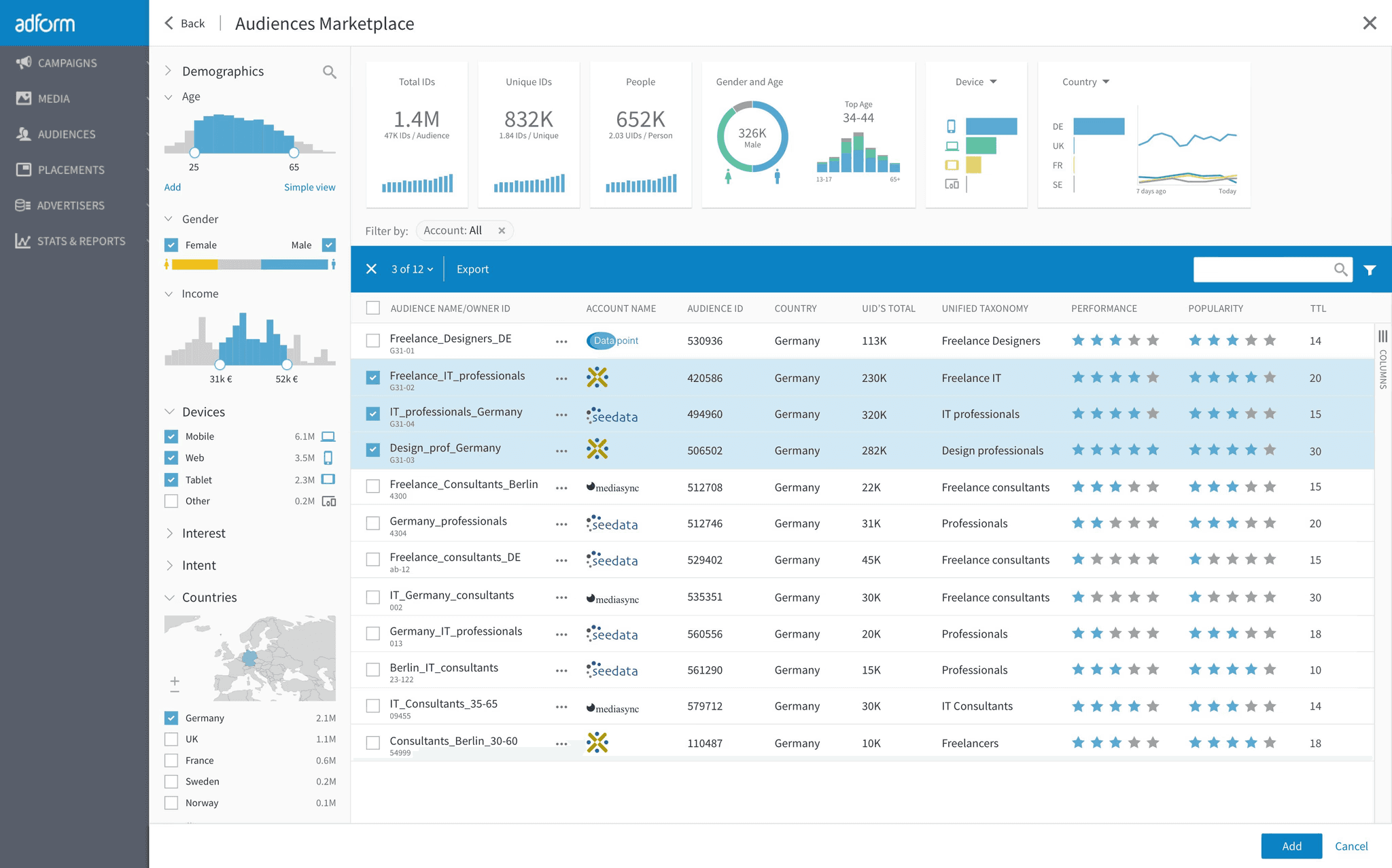
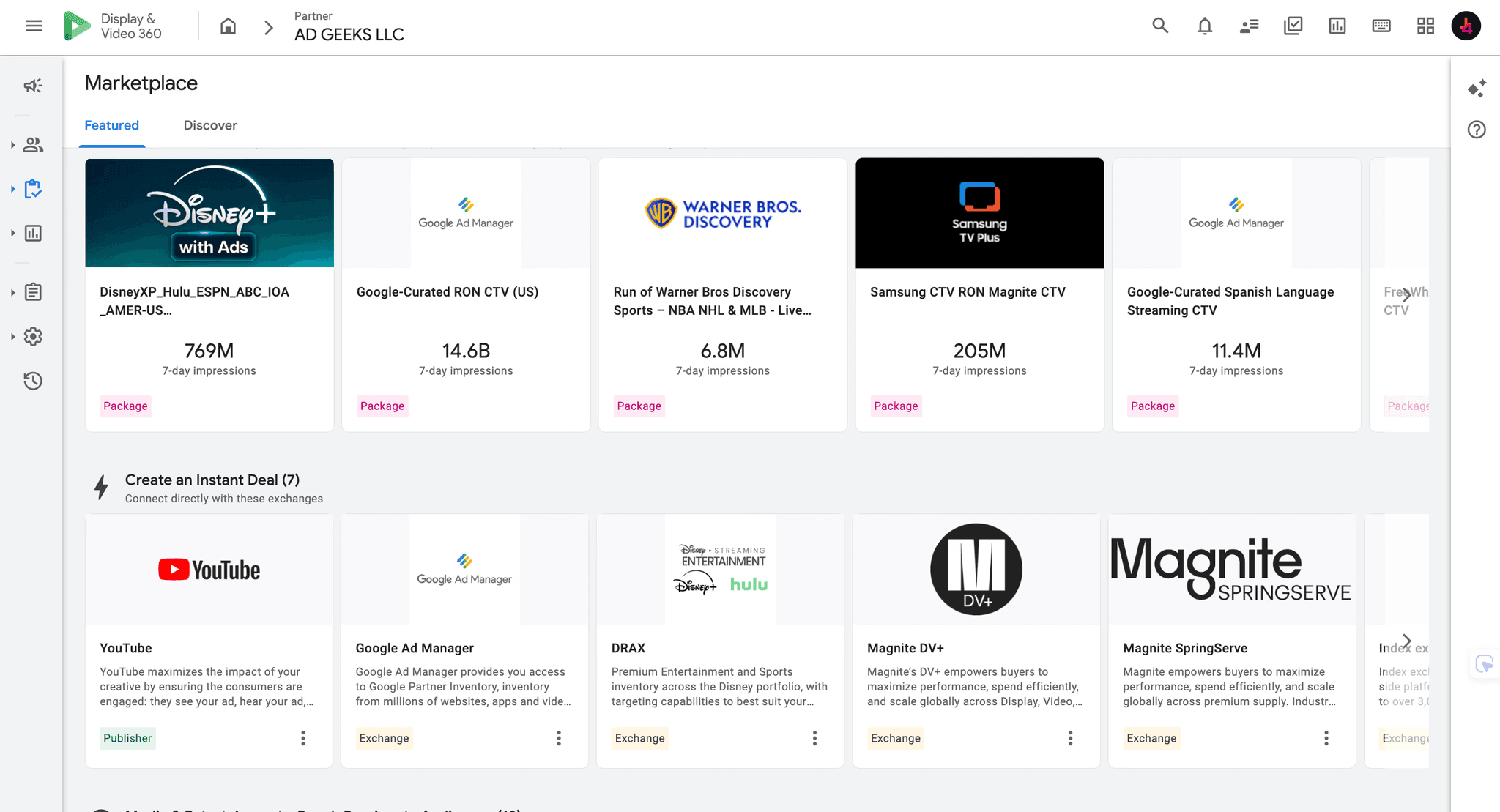
AdGeeks provides Google DV360, Amazon DSP and Adform access through self-service, hybrid and fully managed models.
This flexibility can support centralized enterprise governance while allowing regional or specialist teams to retain different levels of operational control.
Key strengths:
Multi-DSP access through one specialist partner.
Self-service, hybrid and managed models.
Display, video, connected TV, audio, native and digital out-of-home capabilities.
Onboarding, platform training and technical support.
Lean operating structure and flexible engagement model.
Potential limitation: AdGeeks does not provide the same global full-service network footprint as the largest holding companies.
Choose AdGeeks when: Transparent platform access, operating flexibility and specialist support are more important than a single global full-service agency contract.
What Enterprise Brands Should Require
Global Governance With Local Flexibility
Define which decisions are centralized and which belong to regional teams. Central governance may cover approved DSPs, brand safety, data use, naming conventions and reporting, while local teams manage market-specific inventory, creative and optimization.
First-Party Data and Privacy
The agency should document how CRM and customer audiences are transferred, activated, suppressed and measured. Legal basis, consent, retention and regional privacy requirements must be clear before activation.
Account Ownership and Portability
Confirm who owns the advertiser accounts, campaign history, audience configurations and reporting data. The contract should explain what can be exported and transferred when the relationship changes.
Service-Level Agreements
Enterprise SLAs should cover launch timelines, incident response, reporting deadlines, optimization cadence, creative review, escalation and market support.
Advanced Measurement
Go beyond platform-reported conversions. Enterprise measurement may include incrementality, experiments, brand lift, customer acquisition, lifetime value, cross-channel reach and executive-level business outcomes.
Use our guide to DV360 reporting metrics when defining the measurement framework.
Multi-DSP Architecture
Using more than one DSP can provide distinct inventory, audience or market advantages, but it also creates duplication and governance challenges.
See the multi-DSP operating model for guidance on coordinating DV360, Amazon DSP and Adform.
Enterprise Agency RFP Scorecard
Category | Questions to score |
|---|---|
Global delivery | Can the partner support every required market, language and time zone? |
Data | How are CRM, CDP and clean-room workflows implemented and governed? |
Platforms | Which DSPs are available, and who owns the accounts? |
Inventory | Which open-web, CTV, audio, DOOH, retail-media and private deals are supported? |
Measurement | Can the agency support incrementality, lift and executive reporting? |
Governance | What controls exist for privacy, brand safety, approvals and audit trails? |
Team | Who will operate the account, and how are central and local teams structured? |
Commercials | Are media, technology, data and service fees separately disclosed? |
Transition | How are data, campaigns and knowledge transferred at onboarding and offboarding? |
How to Shortlist the Right Enterprise Partner
Define the required markets, channels, DSPs and business outcomes.
Document internal stakeholders, approval requirements and governance constraints.
Separate mandatory capabilities from optional services.
Give every shortlisted agency the same representative campaign brief.
Request a proposed account structure, team, platform architecture and measurement plan.
Compare full fees rather than only media CPMs.
Validate references for similar market complexity and budget scale.
Run a controlled pilot before a large multi-market migration where practical.
AdGeeks supports enterprise advertisers and agencies with DV360, Amazon DSP and Adform access through self-service, hybrid and managed models.
Frequently Asked Questions
What Is Enterprise Programmatic Advertising?
Enterprise programmatic advertising is the structured use of automated media buying across large budgets, multiple markets, brands, channels or business units. It typically requires formal governance, data integration, advanced measurement and coordinated global and local teams.
Which Programmatic Agency Is Best for an Enterprise Brand?
The best partner depends on the operating model. Merkle is strong for CRM and customer data; dentsu, GroupM and Publicis Media provide global network scale; Havas integrates brand and performance media; MiQ offers specialist managed programmatic; and AdGeeks provides flexible independent multi-DSP access.
What Should an Enterprise Programmatic SLA Include?
An SLA should define launch timelines, response times, escalation routes, optimization cadence, reporting deadlines, incident handling, creative approvals, market coverage and named responsibilities.
How Should Enterprises Activate First-Party Data?
Start with a documented consent and governance framework. Then define approved audience use cases, transfer methods, suppression rules, retention, measurement and market-specific privacy requirements.
Should an Enterprise Use One DSP or Multiple DSPs?
One DSP simplifies governance and frequency management. Multiple DSPs can provide unique inventory, audiences or regional strength. Use more than one only when each platform has a defined role and the organization can manage duplication, fees and measurement.
How Can Enterprises Compare Programmatic Agency Fees?
Require separate disclosure of media spend, DSP fees, agency fees, data, verification, measurement, creative and any markups or rebates. Compare total cost against the proposed scope and expected operating value.
Who Should Own the DSP Account?
Enterprise advertisers should seek clear contractual rights to their campaign data, reporting and account history. The ideal account structure depends on the platform and service model, but ownership and portability must be agreed before launch.
How Long Does an Enterprise Programmatic Migration Take?
Timing depends on markets, platforms, data integrations, creative volume, contracts and governance. A phased migration with parallel validation is safer than moving every market and campaign at once.
What Is the Difference Between the General and Enterprise Agency Lists?
The general agency guide compares partners across a broad range of advertiser needs. This enterprise guide focuses specifically on global scale, governance, first-party data, SLAs, privacy and advanced measurement.
Final Recommendation
Enterprise brands should choose a programmatic agency based on operating design, not only platform credentials.
The strongest partner will clearly define how global and local teams work together, how data is protected, who owns the accounts, how fees are structured and how media performance connects to business outcomes.
Large network agencies suit organizations seeking broad global integration. Specialist partners suit enterprises that prioritize programmatic depth, transparency and operating flexibility.
Share your markets, data environment, channel requirements and governance model. We’ll recommend a platform and service structure aligned with your organization.