Quick answer: Brands prevent ads from appearing on unsafe inventory by combining suitability rules, authorized-seller checks, independent verification, fraud controls and supply path optimization. Start with documented risk tolerance, buy through verified sellers, exclude high-risk sources, monitor placement-level data and keep a tested incident-response process. No single blacklist or pre-bid segment is enough.
Programmatic buying moves faster than a manual approval process. That speed is useful, but it also creates more places for poor-quality inventory, unsuitable content, unnecessary intermediaries and invalid traffic to enter a campaign.
A working control framework needs 2 connected systems. Brand safety and suitability decide where an ad may appear. Supply path optimization (SPO) decides which sellers and routes are acceptable for reaching that inventory. Treating either system in isolation leaves a gap.
How do brands prevent ads on unsafe inventory?
Brands prevent unsafe placements by setting a written risk policy, translating it into DSP controls, validating authorized sellers, using pre-bid and post-bid verification, and reviewing placement-level exceptions. The team should also maintain inclusion and exclusion lists, remove made-for-advertising inventory, monitor invalid traffic and define who can pause spend during an incident.
Use risk tiers instead of a single “safe or unsafe” label:
Risk level | Typical signal | Default action | Review cadence |
|---|---|---|---|
Critical | Illegal content, malware, spoofed inventory, sanctioned entities, confirmed fraud | Block immediately, pause affected buying and escalate | Real time and incident-led |
High | Adult content, hate speech, graphic violence, severe misinformation, unauthorized sellers | Exclude by default; allow only through documented exception | Daily |
Medium | Sensitive news, user-generated content, unclassified apps, long reseller chains, elevated IVT | Restrict, verify and cap until evidence supports expansion | Weekly |
Low | Known publishers, authorized direct sellers, suitable content and normal IVT | Eligible, subject to standard controls and ongoing monitoring | Weekly to monthly |
This table is an operating baseline, not legal advice. A healthcare advertiser, a gaming brand and a family retailer will set different boundaries. The important part is making those boundaries explicit before launch.
What is the difference between brand safety and brand suitability?
Brand safety protects a brand from clearly harmful environments. Brand suitability applies the brand's own tolerance to content that may be acceptable for one advertiser and wrong for another.
Control | Main question | Example |
|---|---|---|
Brand safety | Is the inventory fundamentally harmful or fraudulent? | Block malware, illegal content, hate speech and spoofed domains |
Brand suitability | Is the content appropriate for this brand, campaign and market? | A news article about alcohol may be acceptable for one advertiser and excluded by another |
SPO | Is this the cleanest, most transparent route to the inventory? | Prefer an authorized direct path over duplicate reseller paths |
Do not apply the strictest possible controls to every campaign without testing the effect. Overblocking can reduce reach, remove legitimate journalism and push delivery toward a smaller, more expensive pool. The goal is controlled access to suitable inventory, not the smallest possible allowlist.
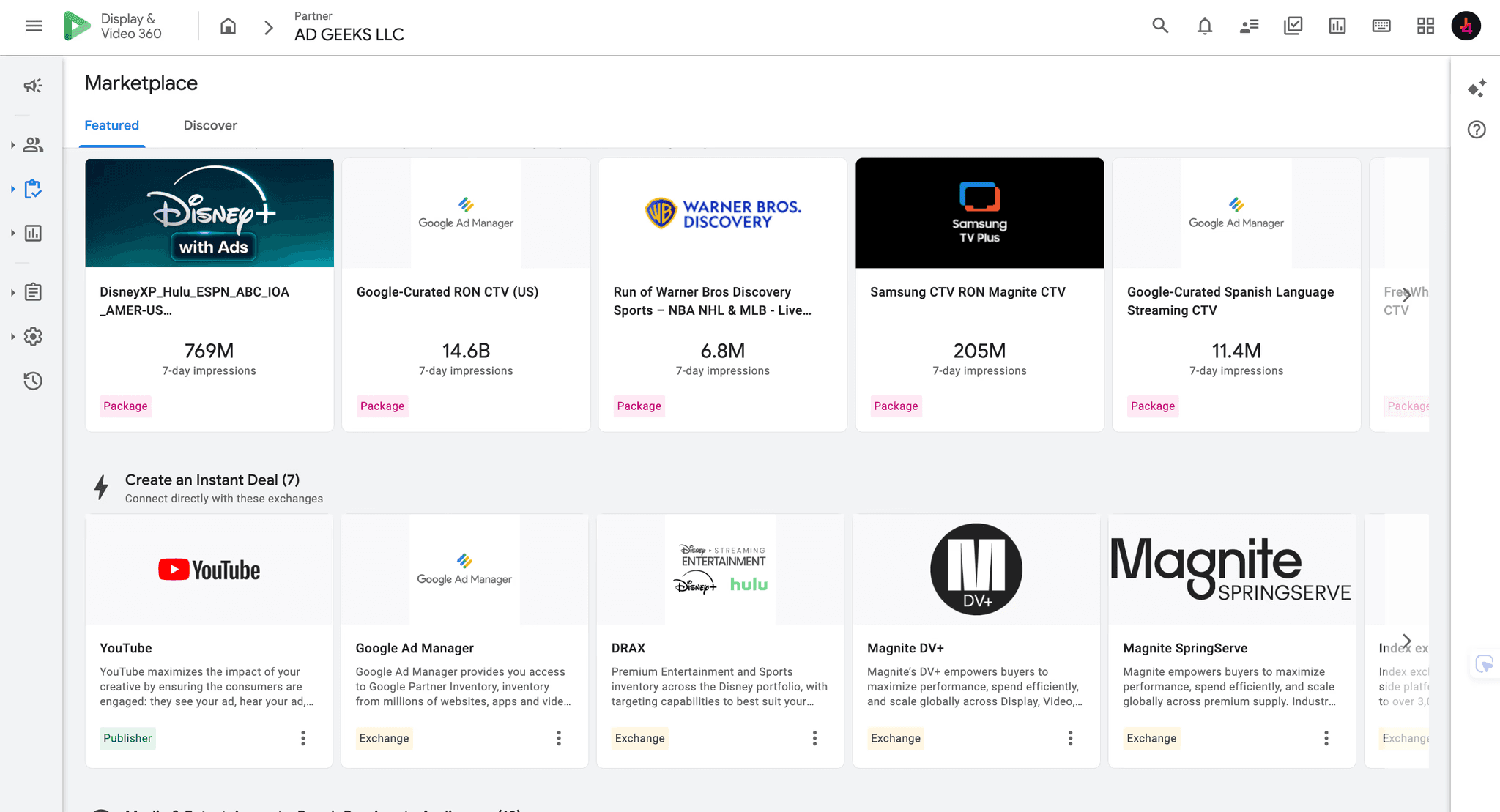
Google's Display & Video 360 documentation separates digital content labels, sensitive categories and other advertiser-level brand controls. Review those controls at the advertiser level, then confirm that line-item settings match the approved policy. Our DV360 audit checklist provides the wider account review around those settings.
Which supply-chain signals should buyers verify?
Start with 3 IAB Tech Lab standards:
ads.txt and app-ads.txt let publishers declare which advertising systems are authorized to sell their web or app inventory. Ads.txt 1.1, released in August 2022, added
OWNERDOMAINandMANAGERDOMAINvariables.sellers.json lets buyers identify direct sellers and intermediaries represented by seller IDs.
The OpenRTB SupplyChain object shows the sequence of selling entities in a bid request.
These standards answer related but different questions. An ads.txt entry says a seller is authorized. sellers.json explains who that seller is. The SupplyChain object shows how a specific opportunity traveled through the market. Compare all 3. A technically authorized path can still be unnecessarily long, duplicated or commercially weak.
Where the DSP permits it, prioritize authorized direct inventory, then review authorized reseller inventory against quality and performance evidence. Do not assume “direct” always means better, but require a reason for every additional hop. Our guide to common DV360 setup mistakes covers the account-level errors that can undermine otherwise sound inventory controls.
How should MFA, IVT and ad fraud be controlled?
Made-for-advertising (MFA) sites are built primarily to generate ad revenue, often through aggressive traffic acquisition, high ad density, repetitive content or disruptive layouts. MFA is not automatically the same as fraud. It is a quality and suitability risk that should be assessed through placement data, page experience, traffic sourcing and business value.
Invalid traffic (IVT) is broader. General invalid traffic includes activity that can be identified with routine filtration, such as known bots. Sophisticated invalid traffic uses methods designed to evade detection, including domain or app spoofing, device farms and manipulated sessions. Use an MRC-aligned verification provider where the budget and risk justify it, and reconcile vendor reporting with DSP and ad-server data.
Avoid treating one fraud percentage as the whole answer. Ask where the activity occurred, whether it was billable, which inventory source carried it, and whether the pattern changed after controls were applied. A useful quality review joins spend, impressions, viewability, completion, conversion signals, IVT, domain or app, exchange, seller and supply path.
If delivery is weak after exclusions, do not immediately reopen every source. Run the diagnosis in order: configuration, eligible reach, bid competitiveness, creative approval, frequency, inventory quality and conversion measurement. The display and video underperformance audit gives a structured sequence.
What should a 25-point programmatic brand safety checklist include?
Use this checklist before launch, after any material campaign change and during scheduled quality reviews.
Policy and ownership
Document risk tolerance. Define prohibited content, restricted content and permitted exceptions by market, product and campaign objective.
Name accountable owners. Assign one owner for policy, one for platform implementation and one person authorized to pause spend.
Map controls to platforms. Translate each policy rule into advertiser, insertion-order, line-item, inventory and verification settings.
Set an exception process. Record who approves exceptions, why they are needed, their scope and their expiry date.
Schedule reviews. Review controls before launch, after major edits and at a fixed weekly or monthly cadence based on risk.
Inventory and seller validation
Require authorized sellers. Buy web and app inventory through valid ads.txt or app-ads.txt relationships where supported.
Validate seller identities. Compare seller IDs with sellers.json and investigate confidential or incomplete entries when risk is material.
Inspect SupplyChain objects. Check whether the chain is complete and whether each node has a clear role.
Remove duplicate paths. Identify the same publisher inventory offered through multiple exchanges and keep the paths with better transparency, cost and performance.
Prefer evidence-backed routes. Prioritize direct or efficient reseller paths, but retain an intermediary when it adds unique access, quality or measurable value.
Content and placement controls
Set content labels. Apply age-appropriateness and content-label controls consistently at the advertiser and line-item levels.
Review sensitive categories. Match exclusions to the campaign's written suitability policy instead of using an inherited default.
Maintain exclusion lists. Keep domain, app, channel, URL and keyword exclusions versioned, dated and attributable to an owner.
Build inclusion lists selectively. Use allowlists for the highest-risk campaigns, premium launches or regulated categories, then measure reach loss.
Audit apps and CTV identifiers. Review bundle IDs, store URLs, device types and inventory declarations. Investigate names that do not match the advertised property.
Fraud, quality and verification
Activate pre-bid controls. Apply appropriate fraud, viewability and suitability filters before entering the auction.
Measure post-bid outcomes. Use placement-level verification to find risks that pre-bid segments did not prevent.
Monitor IVT trends. Compare general and sophisticated IVT by exchange, device, geography, creative and time of day.
Identify MFA exposure. Review traffic sourcing, ad density, content quality, refresh behavior and user experience rather than relying on one label.
Check measurement consistency. Reconcile DSP, ad server and verification totals, document expected methodology differences, and investigate abrupt gaps.
Operations and response
Control change access. Limit who can edit brand controls, inventory sources, lists and verification settings. Keep a change log.
Create automated alerts. Trigger alerts for blocked-category spikes, new high-spend domains, IVT increases, unknown apps and unusual supply paths.
Review placement reports. Sample the highest-spend, fastest-growing and newly appearing domains or apps, not only the worst performers.
Test the incident plan. Practice pausing affected paths, preserving evidence, notifying stakeholders and relaunching safely.
Record corrective action. For every incident, document root cause, spend exposure, controls changed, owners and a follow-up date.
Treat the checklist as a control record, not a one-time launch task. The best version shows what was checked, by whom, when, and what changed.
How does supply path optimization improve quality without killing reach?
SPO works when it reduces waste while preserving useful access. Start with a supply-path report that connects exchange, seller ID, publisher or app, deal, auction type, fees where available, quality metrics and outcomes. Then make changes in stages.
Stage 1 - remove obvious risk. Exclude unauthorized sellers, malformed paths, confirmed spoofing and consistently invalid inventory.
Stage 2 - consolidate duplicates. Where several paths reach the same inventory, compare clearing cost, win rate, latency, quality, data access and deal terms. Move spend toward the stronger route.
Stage 3 - test concentration. Increase spend on preferred paths gradually. Monitor reach, frequency, CPM, win rate, conversions and quality. Excessive concentration can reduce auction access or make delivery dependent on one supplier.
Do not optimize only to the lowest CPM. A cheaper path can carry weaker placements, more invalid traffic or less useful reporting. Evaluate the cost of a suitable, viewable and valid impression. Then apply performance improvements from our DV360 optimization tips after quality gates are stable.
What should happen when an unsafe placement is found?
Use a short incident sequence:
Contain: pause the affected domain, app, deal, exchange or line item. Avoid stopping unrelated activity without evidence.
Preserve: save placement reports, screenshots, timestamps, bid-path details, creative IDs and verification records.
Assess: classify the incident, estimate spend and impression exposure, and determine whether it is isolated or systemic.
Notify: inform the defined owner, agency, platform, verification partner and legal or communications team when required.
Correct: update exclusions, supply controls, permissions, alerts or vendor settings. Confirm that the fix is active.
Validate: relaunch in a limited scope, monitor closely and close the incident only when evidence shows the risk is controlled.
Speed matters, but so does precision. A broad panic block can damage delivery and hide the actual root cause. A documented response makes the next decision faster.
When should a brand request a programmatic risk and quality audit?
Request an audit before moving significant spend to a new DSP, entering a regulated market, expanding into open exchange inventory, onboarding a new agency or verification vendor, or after an unexplained spike in IVT, unsuitable placements or reseller activity.
AdGeeks can review campaign controls, placement quality, seller authorization, supply paths, verification coverage and incident readiness across your active setup. Our Display & Video 360 service connects platform access with hands-on campaign operations.
We will identify the highest-priority gaps, document corrective actions and separate immediate blocks from measured tests.
What else do buyers ask about brand safety and SPO?
Is brand safety the same as brand suitability?
No. Brand safety blocks fundamentally harmful or fraudulent environments. Brand suitability applies a brand's own tolerance to otherwise legitimate content. Suitability varies by industry, market, campaign and audience.
Does ads.txt guarantee safe inventory?
No. ads.txt confirms that a seller is authorized by the publisher. It does not guarantee content quality, viewability, low fraud, efficient fees or campaign suitability. Combine it with sellers.json, SupplyChain data and placement-level controls.
Should every campaign use an allowlist?
No. Allowlists are useful for regulated, high-risk or premium campaigns, but they can restrict scale and discovery. Use them where risk justifies the trade-off, then measure delivery, reach and cost.
What is the difference between MFA and ad fraud?
MFA describes inventory designed mainly to generate advertising revenue, often with poor user experience. Fraud involves invalid or deceptive activity. A site can be low quality without being fraudulent, so the controls and escalation paths differ.
How often should exclusion lists be updated?
Review high-risk campaigns daily and stable campaigns weekly. Conduct a formal monthly review of list owners, reasons, expiry dates and duplicates. Update immediately after a verified incident.
Which metrics belong in an SPO review?
Track spend, impressions, CPM, win rate, reach, frequency, viewability, IVT, conversions, publisher or app, exchange, seller ID, deal, auction type and path length. Compare quality-adjusted outcomes, not CPM alone.
Where do the source standards come from?
IAB Tech Lab, ads.txt - Authorized Digital Sellers, Ads.txt 1.1 released August 2022; accessed Oct 23, 2026.
IAB Tech Lab, sellers.json Supply Chain Transparency, specifications finalized Jul 31, 2019; page updated Oct 7, 2026.
Google, View and edit brand controls for your advertiser, accessed Oct 23, 2026.
Media Rating Council, Standards and guidelines, accessed Oct 23, 2026.